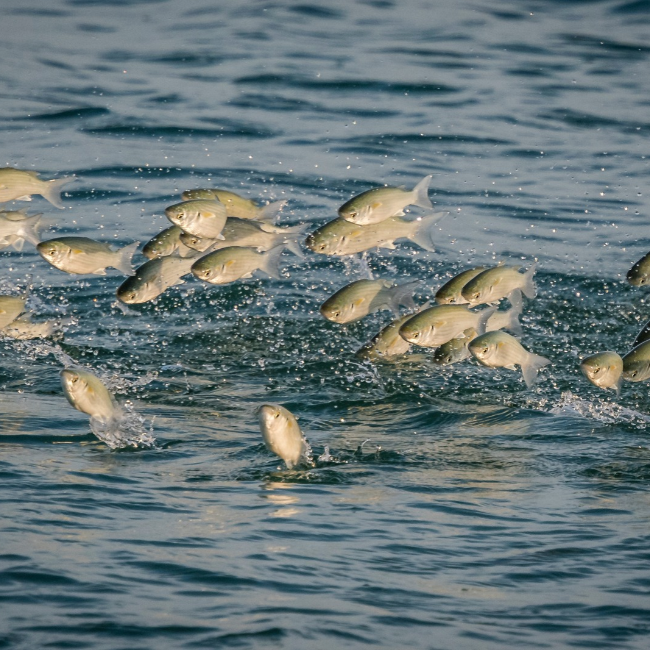
The fall mullet run is one of the most important seasonal bait movements along the Carolina coast. As water temperatures begin falling, striped mullet move from estuaries, rivers and shallow coastal areas toward the ocean as part of their seasonal migration. Schools of mullet moving through inlets and along beaches can create a traveling food source that red drum, spotted seatrout and other predators are eager to follow.
Around North Myrtle Beach and the Grand Strand, the most visible part of the run often peaks during October, but that does not mean the fishing opportunity disappears when the calendar turns to November. Mullet movement, changing bait availability and the feeding patterns created during the fall transition can continue to influence fishing well into November. By December, conditions become more winter-like, but striped mullet are still within their offshore spawning season, making the fall run part of a larger seasonal cycle rather than a one-week event.
Understanding that cycle can help anglers choose better locations, bait and fishing gear as fall progresses.
What Is The Fall Mullet Run?
Striped mullet spend much of the year in estuaries, creeks, rivers and coastal waters. During fall, mature fish begin moving toward offshore spawning areas, often traveling in noticeable schools. In South Carolina, striped mullet can spawn from fall into spring, with much of the spawning activity taking place during the winter months.
For anglers, the important part is what happens as those fish move toward the ocean. Mullet traveling through creeks, inlets and along beaches can become concentrated in areas where predator fish can intercept them. A scattered food source suddenly becomes easier for red drum, trout and other fish to find.
The peak beach activity commonly associated with the “mullet run” often occurs earlier in fall, but November anglers should still pay attention to mullet. Smaller schools, remaining finger mullet and predators that have spent weeks feeding on them can keep mullet-shaped baits and lures relevant after the biggest schools have moved through.
Why Does The Fall Mullet Run Matter For Fishing?
Predator fish follow food, and a moving school of baitfish can create an opportunity that is difficult for larger fish to ignore. When mullet become concentrated along a shoreline, around an inlet or near the mouth of a creek, predators can spend less energy searching for individual meals.
Red drum are one of the biggest reasons Grand Strand anglers pay attention to the fall movement. Large bull reds can feed around inlets and beaches during the fall, while smaller red drum continue taking mullet around marsh edges, oyster areas and creeks. Spotted seatrout also feed heavily on small mullet during fall, particularly larger trout that consume more fish as they grow.
Other predators can join the action depending on water temperature and timing. Spanish mackerel and king mackerel can take advantage of moving bait earlier in the season before colder water pushes them farther south. By November, red drum and trout become more dependable targets than trying to chase species that are already moving away from the area.
How Can You Tell When Mullet Are Moving?
Watch the water instead of looking only at the end of your fishing rod. Schools of mullet can create V-shaped wakes as they move near the surface, and larger groups might show themselves by jumping or disturbing the surface. Birds working over the water can also signal bait activity, although birds can feed on several different types of baitfish.
From the beach, look for dark patches or nervous water moving parallel to the shoreline. Around inlets and creeks, pay attention to areas where current funnels bait through a smaller space. Predator activity can offer another clue. Bait suddenly scattering, fish striking at the surface or birds repeatedly diving in one area can all indicate that something larger is feeding below.
You do not need a massive school directly in front of you to take advantage of the pattern. If mullet have been moving through the area, fish might still respond well to finger mullet, cut mullet or artificial lures that resemble them.
What Fishing Gear Is Best For The Fall Mullet Run?
The right gear depends on whether you are fishing the surf, an inlet or inshore water. For surf fishing, a longer rod paired with a saltwater spinning reel gives you the casting distance and control needed to fish troughs, cuts and areas beyond the first break. Line strength, leader material and hook size should match the fish you are targeting, especially if large red drum are possible.
Circle hooks, sturdy leaders, swivels and surf sinkers belong in a fall tackle box when you plan to fish natural mullet. Sinker weight should match the current and wave conditions rather than following one fixed rule. Calm water might allow a lighter weight, while stronger current can require a heavier pyramid or other surf-style sinker to keep your bait in place.
Inshore anglers can usually go lighter. A medium or medium-heavy spinning setup can handle finger mullet around creek mouths, grass lines and oyster structure while still giving anglers enough power for red drum or larger trout. Pliers, line cutters, extra leader and several sinker sizes give you room to adjust as conditions change.
Boulineau’s Ace Hardware carries rods, reels, line, hooks, rigs, sinkers and other fishing gear for local surf and inshore fishing, making it easier to build a setup around where you actually plan to fish.
What Bait Should You Use During The Mullet Run?
Live finger mullet are an obvious choice because they match the food predators are already seeing. Red drum, flounder and spotted seatrout can all take finger mullet, and different rigs allow anglers to present them close to the bottom or let them swim more naturally.
Cut mullet can be especially useful when targeting larger red drum from the surf or around an inlet. Fresh cut bait releases scent into the water while still matching the natural food source moving through the area. Anglers targeting large fish should make sure the rod, reel, leader and hook are strong enough for the job rather than simply putting a large piece of bait on light tackle.
A cast net can help anglers collect mullet where doing so is legal and appropriate. Boulineau’s Ace Hardware carries cast nets and other bait-catching equipment, and anglers should always check current South Carolina regulations before collecting bait.
What Artificial Lures Work When Mullet Are Moving?
Artificial lures that imitate the size, shape and movement of small baitfish can work well when predators are focused on mullet. Soft-plastic paddletails, swimming plugs, spoons and other baitfish-style lures allow anglers to cover water quickly instead of waiting for a fish to find stationary bait.
For spotted seatrout and inshore red drum, soft plastics can be worked around creek mouths, grass edges and areas with moving water. In the surf, spoons and swimming lures can help anglers reach fish actively chasing bait.
Matching the general size of the mullet in the area can matter more than finding one exact color. If predators are chasing small finger mullet, an oversized lure might not look as natural. Watching the bait before choosing a lure can give you a useful starting point.
Where Should You Fish During The Fall Mullet Run?
Inlets are natural concentration points because bait moving between estuaries and the ocean has to pass through them. Beaches near inlets can also hold predator fish waiting for mullet to move past, while surf troughs and cuts give fish places to ambush bait traveling along shore.
Inshore, creek mouths, marsh edges and oyster areas can remain productive while finger mullet are still present. Spotted seatrout frequently feed around moving water, while red drum can work shallow edges and structure where bait becomes easier to trap.
By November, anglers should be willing to adjust rather than automatically fishing the exact locations that produced during the October peak. Cooling water can shift bait and predators toward different depths and areas. Following visible bait activity, tide movement and recent fishing conditions becomes increasingly important as fall moves closer to winter.
Does The Mullet Run Continue Into November And December?
November can still be relevant to the fall mullet pattern around the Grand Strand, even though the biggest visible schools along the beaches often peak earlier. Mullet continue their seasonal movement, and fish that have been feeding heavily on them can remain willing to take live mullet, cut mullet and mullet-shaped artificial lures.
By December, anglers should think more in terms of winter transition than the classic fall beach run. Adult striped mullet are within their offshore spawning season, while cooler water changes the mix and location of predator fish closer to shore. Red drum and spotted seatrout can still respond to mullet presentations, but fishing locations and techniques might need to change as fish settle into colder-water patterns.
That is why understanding the mullet run remains useful even after its most dramatic stage has passed. It teaches anglers to watch seasonal bait movement and adjust with it rather than fishing the same way all year.
Follow The Bait During Fall Fishing
The fall mullet run matters because it puts one of the coast’s most important baitfish on the move at the same time many predator species are feeding aggressively. Around Cherry Grove, North Myrtle Beach and the Grand Strand, that can create excellent opportunities for red drum, spotted seatrout and other coastal fish.
Although the beach run often reaches its most noticeable stage in October, November anglers should not ignore mullet. Live finger mullet, cut mullet and artificial lures that imitate baitfish can remain useful as the season progresses, while December brings a transition toward winter fishing rather than an immediate end to the pattern.
Boulineau’s Ace Hardware can help you prepare with surf and inshore rods, reels, line, leaders, circle hooks, sinkers, cast nets and artificial lures. Build your setup around the fish you want to target, then let bait movement, tides and changing fall conditions tell you where to make the next cast.
FAQs
1. When Is The Fall Mullet Run In South Carolina?
The most noticeable mullet movement along South Carolina beaches generally develops during fall, with October often bringing peak activity around the Grand Strand. Mullet movement and related fishing opportunities can continue into November, while adult striped mullet remain within their offshore spawning season into the winter.
2. What Fish Follow The Fall Mullet Run?
Red drum and spotted seatrout are two important Grand Strand predators that feed on mullet during fall. Larger bull red drum can show up around inlets and beaches, while smaller reds and trout feed on finger mullet in inshore areas. Spanish and king mackerel can also take advantage of moving bait earlier in fall before cooler water pushes them south.
3. What Gear Should I Use For The Fall Mullet Run?
Surf anglers should consider a suitable surf rod and saltwater spinning reel along with sturdy line, leader material, circle hooks, swivels and sinkers matched to the current. Inshore anglers can usually use a medium or medium-heavy spinning setup with live finger mullet or baitfish-style artificial lures. The final setup should match both the fishing location and the size of fish you expect to encounter.